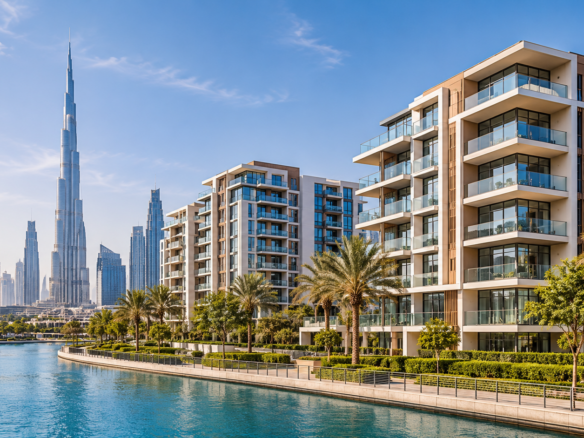
International Investors in Dubai are drawn to more than the city’s luxury developments and impressive skyline. The emirate offers a combination of international business connectivity, designated foreign ownership areas, an active rental market, a wide choice of properties and a regulatory framework for real estate transactions.
Dubai’s latest market figures demonstrate the scale of this activity. According to the Dubai Land Department’s 2025 Annual Data Review, the emirate recorded 270,328 real estate transactions worth AED 917 billion. The number of unique investors reached 193,100, compared with 156,149 in 2024. Total real estate investment value reached AED 680 billion across 258,554 investments.
These figures reflect the participation of a broad investor base, including both residents and overseas buyers. They also demonstrate why Dubai continues to attract attention from people considering international property investment.
But what makes the market attractive to buyers from different countries? Here are the main factors international investors should understand before making a property decision.
1. Why International Investors in Dubai Find the Market Attractive
Dubai has developed into a major destination for international business, tourism and property investment. Its economy attracts entrepreneurs, professionals, business owners and high-net-worth individuals from different parts of the world.
This international environment creates demand for different types of residential property. Some buyers look for apartments close to business districts, while others prefer family homes in established communities or luxury residences in waterfront locations.
The Dubai Land Department’s 2025 data also highlights the market’s broad participation. Asia and Europe together accounted for nearly AED 496 billion in investment value, while South Asia represented the largest source region by investor numbers.
For overseas buyers, this diversity provides access to a market with several property categories and different investment strategies.
However, overall market growth should not be confused with guaranteed returns. Investors need to assess each property’s location, purchase price, expected expenses and potential resale demand independently.
2. Foreign Property Ownership in Designated Freehold Areas
One of the most important considerations for international buyers is whether they can legally own property in their chosen location.
Dubai allows non-UAE nationals to acquire freehold ownership in designated areas. Depending on the property and applicable regulations, other ownership interests, including usufruct and long-term lease rights, may also be available.
This gives eligible foreign buyers the opportunity to purchase property even if they do not live in the UAE.
Popular areas with foreign ownership opportunities include:
- Downtown Dubai: An established central district known for residential towers, retail destinations and access to major business and lifestyle facilities.
- Dubai Marina: A waterfront community offering apartments, restaurants, leisure facilities and access to the marina.
- Palm Jumeirah: A recognised luxury destination with apartments, villas and exclusive waterfront residences.
- Business Bay: A mixed-use district close to Downtown Dubai, attracting professionals and residents seeking central locations.
- Dubai Hills Estate: A master-planned community with residential developments, green spaces and family-oriented facilities.
- Dubai Creek Harbour: A waterfront destination with residential developments and connections to the wider Creek area.
International buyers should confirm the ownership classification of the specific property before signing an agreement. Foreign ownership is not automatically available throughout every part of Dubai.
The Dubai Land Department’s ownership guidance provides further information about eligibility and designated ownership areas.
3. Rental Demand and Opportunities for Property Income
Rental income is another important reason international investors consider Dubai.
The emirate attracts residents from different countries, including professionals, entrepreneurs, families and employees working across its business districts. This creates demand for apartments, townhouses and villas in different price categories.
Population growth also contributes to the wider housing market. Digital Dubai reported that the emirate’s population reached approximately 4.58 million by the end of 2025, representing annual growth of 7.5%.
For property owners, this expanding population may support rental demand. However, the performance of individual properties depends on their location, condition, rental price and competition from other developments.
Before purchasing a property for rental purposes, investors should examine:
- Recent rental transactions in the same community.
- The availability of comparable properties.
- Expected vacancy periods.
- Annual service charges and maintenance expenses.
- Property management and leasing costs.
- The likely tenant profile and length of tenancy.
A projected rental yield should never be treated as guaranteed income. Investors should calculate the net return after accounting for operating expenses and periods without tenants.
4. The UAE Tax Environment and Property Investment
Tax considerations can influence where international buyers decide to invest.
The UAE does not impose personal income tax on individuals in the conventional way found in many other countries. In addition, the Federal Tax Authority states that income earned by a natural person from real estate investment in a personal capacity is generally not treated as a business activity for UAE Corporate Tax purposes.
However, the treatment depends on the ownership structure and nature of the activity.
For example, property-related activities conducted through a company or as a licensed business may have different tax obligations. VAT and other applicable requirements should also be considered where relevant.
International investors must also review their tax responsibilities in their country of residence or citizenship. Purchasing property in Dubai does not automatically remove tax obligations elsewhere.
For accurate guidance, consult the UAE Federal Tax Authority’s explanation of Corporate Tax for natural persons and obtain professional advice before choosing an ownership structure.
5. Residency Opportunities Linked to Property Ownership
For some overseas buyers, property investment is also connected to the possibility of spending more time in the UAE.
Eligible real estate investors may qualify for a UAE Golden Visa under the applicable property ownership requirements.
The real estate investment route generally requires ownership of one or more properties with a combined value of at least AED 2 million, subject to the relevant conditions, documentation and approval procedures.
This can make property ownership particularly interesting for buyers who want to combine an investment with a potential long-term residency option.
Nevertheless, purchasing property does not automatically guarantee a visa. Applicants must meet the applicable requirements, and the relevant authorities assess each application.
Investors should check the latest eligibility conditions directly with the General Directorate of Residency and Foreigners Affairs in Dubai before making a purchase based on residency expectations.
6. International Connectivity and Business Opportunities
Dubai’s geographical position between Europe, Asia and Africa supports its role as an international business and travel centre.
The emirate is connected to major global destinations through its aviation network, ports, logistics infrastructure and business districts.
According to Digital Dubai, the city’s airports handled approximately 96 million passengers during 2025. This level of international movement reflects Dubai’s importance as a destination for tourism, business travel and international connections.
For overseas property owners, connectivity can be relevant in several ways. It makes the city more accessible for buyers who travel regularly, supports business activity and helps attract residents and visitors from different markets.
It is also one reason Dubai appeals to investors who may not intend to occupy their properties themselves.
7. A Wide Choice of Residential Investment Options
Dubai offers properties across different price ranges, locations and development stages. This allows international buyers to consider an approach that reflects their financial objectives and investment horizon.
Ready Properties
Completed properties allow buyers to inspect the actual unit, review the building and surrounding community, and assess existing rental evidence.
Depending on the transaction and handover arrangements, a ready property may also offer the opportunity to begin generating rental income sooner than an off-plan purchase.
Off-Plan Properties
Off-plan developments allow buyers to purchase units before construction is completed. Payment schedules may be structured around agreed development milestones or other contractual arrangements.
These properties can provide access to new residential communities and different unit selections. However, the buyer should carefully examine the developer, project registration, escrow arrangements, payment schedule and contractual completion terms.
The Dubai Land Department’s project registration service explains the registration process and the opening of escrow accounts for off-plan projects.
International buyers should compare ready and off-plan opportunities based on their individual circumstances rather than assuming one approach is always better.
8. Regulation and Property Buyer Protection
Buying property in another country requires confidence in the registration process and the institutions responsible for overseeing transactions.
Dubai’s real estate sector is regulated by the Dubai Land Department and the Real Estate Regulatory Agency. Their responsibilities include property registration, developer regulation and oversight of relevant real estate activities.
For off-plan developments, project escrow accounts provide a regulated mechanism for handling payments collected for registered projects. Developers must follow the applicable project registration and escrow requirements.
Buyers should still carry out their own checks. Before transferring funds, they should confirm the project’s registration, verify the developer and use the official payment details associated with the transaction.
A regulatory framework can help protect the interests of buyers, but it does not remove market, construction or financial risks.
9. Long-Term Development and Economic Growth
Dubai continues to invest in transport, infrastructure, commercial districts, tourism facilities and residential communities.
The Dubai Economic Agenda D33 aims to strengthen the emirate’s position as a leading international destination for business, investment and economic activity.
For property buyers, wider economic development matters because employment opportunities, business expansion and population growth can influence housing demand over time.
However, future infrastructure plans should not be treated as a promise of property price appreciation. Investors should examine actual project progress, accessibility, existing demand and competing supply before choosing a location.
The most suitable investment is not necessarily the property in the area with the largest number of announcements. It is the property whose price, location and expected demand make sense for the buyer’s objectives.
What Should International Investors Consider Before Buying in Dubai?
Although the market offers several attractive features, overseas buyers should approach every purchase with a clear strategy and a realistic understanding of the costs involved.
Before committing capital, consider the following points:
1. Confirm Foreign Ownership Eligibility
Check that the property is located in an area where the intended ownership rights are available to the buyer.
2. Research the Community
Compare nearby developments, transport links, facilities, rental demand and competing property supply.
3. Calculate the Full Purchase Cost
Include the property price, Dubai Land Department registration fees, agency fees where applicable, trustee charges, mortgage costs and other administrative expenses.
4. Assess Net Rental Returns
Review comparable rental transactions and deduct service charges, maintenance, management expenses and potential vacancy periods.
5. Verify the Developer and Project
For off-plan purchases, confirm the project’s registration, escrow account, developer details and contractual payment terms.
6. Consider Currency and Tax Exposure
Exchange-rate changes can affect the effective purchase cost and investment returns for buyers transferring funds from abroad. Tax obligations in the investor’s home country should also be reviewed.
7. Plan the Exit Strategy
Consider the likely future buyer, resale demand, expected holding period and the possibility that market conditions may change.
Is Dubai Real Estate a Good Choice for International Investors?
Dubai offers a combination of foreign ownership opportunities, rental market activity, international connectivity, a wide range of residential properties and a structured real estate registration system.
The 2025 market figures demonstrate the scale of investment activity and the continued participation of buyers from different regions. Population growth and wider economic development also provide important context for understanding the emirate’s housing market.
However, no investment is suitable for every buyer. Property prices can change, rental income is not guaranteed, and individual developments can perform differently from the wider market.
International Investors in Dubai should therefore assess each opportunity according to its purchase price, location, ownership rights, expected expenses, rental prospects and long-term objectives.
At Laureate Properties, we help buyers explore residential developments, compare locations and understand available property opportunities according to their investment requirements.
Considering a property investment in Dubai? Explore our off-plan property opportunities or contact our team to discuss suitable developments and your investment objectives.
Frequently Asked Questions
Can international investors buy property in Dubai?
Yes. Non-UAE nationals can acquire freehold property in designated areas of Dubai, subject to the applicable ownership regulations and registration requirements.
Do foreign buyers need UAE residency to purchase property?
No. Non-residents can purchase eligible properties in Dubai’s designated foreign ownership areas. They should provide the required identification and transaction documents during the purchase process.
What makes Dubai attractive to international property investors?
Dubai offers designated freehold ownership areas, an internationally connected economy, rental market opportunities, different property categories and a regulated real estate transaction framework. The suitability of an investment depends on the individual property and buyer’s objectives.
Can property ownership qualify a foreign buyer for a UAE Golden Visa?
Eligible real estate investors may qualify under the applicable rules, which generally include a combined property value of at least AED 2 million. Other conditions and approval requirements apply.
Do international property owners pay tax on rental income in Dubai?
Income earned by a natural person from real estate investment in a personal capacity is generally outside the scope of UAE Corporate Tax. Different rules may apply to companies and business activities. Buyers should also consider tax obligations in their home countries.
Is buying off-plan property in Dubai suitable for overseas investors?
It may be suitable for buyers seeking access to new developments and structured payment schedules. However, they should verify the developer, project registration, escrow arrangements, payment terms and contractual conditions before committing.
Can overseas investors manage their Dubai properties remotely?
Yes. Owners can appoint suitable property management providers to assist with leasing, tenant communication, maintenance and other operational responsibilities. Management fees and service arrangements should be reviewed before appointment.
What costs should foreign buyers budget for?
Buyers should consider the property price, Dubai Land Department registration fees, agency fees where applicable, trustee and administrative charges, mortgage expenses, service charges, maintenance and property management costs.