Dubai’s New 80km Road: Key Benefits, Route, Cost & Property Impact
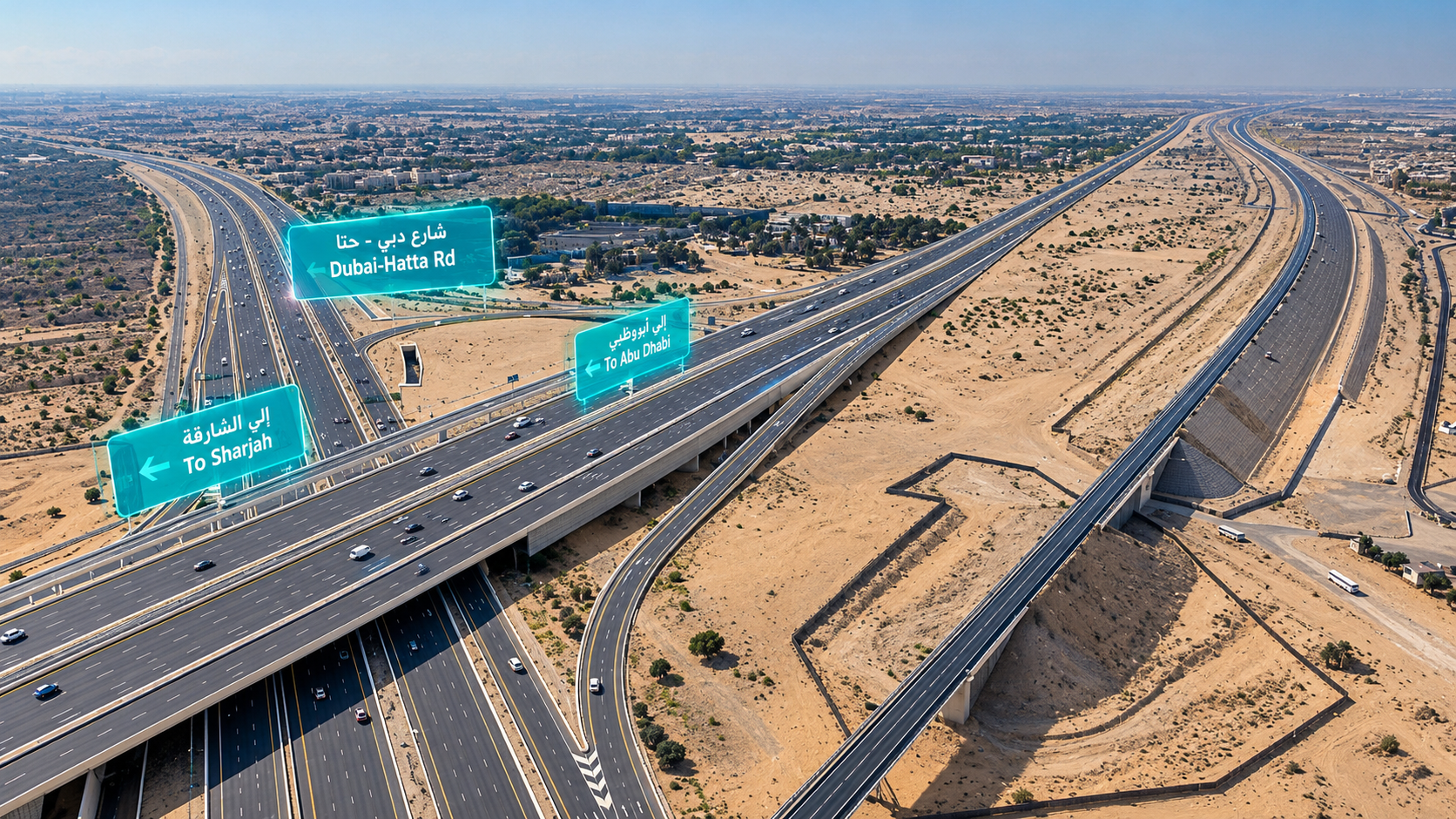
Dubai’s new 80km road is a major transport project designed to improve connectivity between Dubai, Abu Dhabi and Sharjah. The New Fourth Corridor is intended to support growing traffic demand, improve access to important destinations and strengthen connections between residential communities, logistics facilities and major transport routes.
For property buyers and investors, the project is worth monitoring because road infrastructure can influence accessibility and future development. However, the effect on property prices will depend on the location, actual access to the road, market conditions and the project’s delivery.
In this guide, we explain Dubai’s new 80km road, its route, announced cost, expected travel-time savings and the property factors buyers should consider.
What Is Dubai’s New 80km Road?
Dubai’s new 80km road is officially known as the New Fourth Corridor Project. It is planned to connect Al Faya Road in Abu Dhabi with Al Shanouf Road in Sharjah, creating an important transport link across the region.
According to Dubai’s Roads and Transport Authority (RTA), the project will be delivered in two phases. It includes new roads, bridges, tunnels and infrastructure intended to improve traffic flow and connections between key destinations.
The corridor is also designed to support logistics and freight movement while serving residential and development areas along its route.
Dubai’s New 80km Road: Route and Key Details
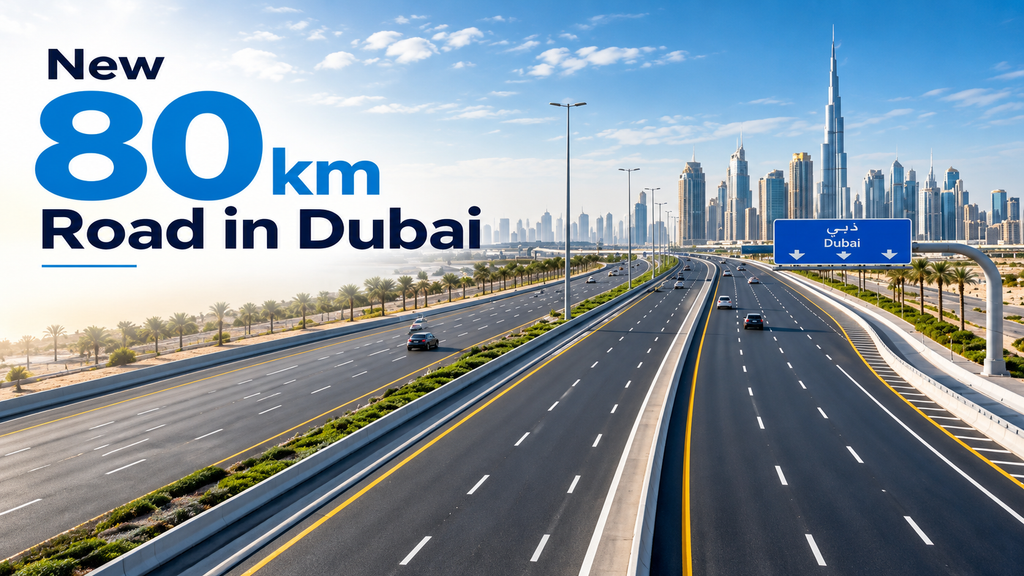
The planned corridor stretches approximately 80 kilometres between Abu Dhabi and Sharjah, connecting with Dubai’s existing road network.
The route will pass key destinations and infrastructure, including Al Maktoum International Airport, the Al Marmoom Desert Conservation Reserve, the Al Wohoosh Desert Conservation Reserve and the Etihad Rail route.
These connections are intended to improve regional mobility and support the movement of people and goods.
The project is divided into two main phases:
Phase 1: Al Shanouf Road to Dubai–Al Ain Road
The first phase covers approximately 30 kilometres, with an announced investment of around AED 3.5 billion.
According to the RTA announcement, this phase is planned to include:
- A 12-lane road across both directions.
- Capacity of approximately 24,000 vehicles per hour in both directions.
- A reduction in the targeted journey time from 35 minutes to 14 minutes.
- Infrastructure serving approximately 600,000 people.
- New bridges, tunnels and upgraded intersections.
- Widening part of Dubai–Al Ain Road from three to four lanes in each direction between Emirates Road and Lehbab Road.
These are planned project specifications and expected benefits, rather than a guarantee of the travel time every driver will experience.
Phase 2: Dubai–Al Ain Road to Al Faya Road
The second phase covers approximately 50 kilometres and connects the Dubai–Al Ain Road section with Al Faya Road in Abu Dhabi.
The RTA has outlined the following targets and infrastructure:
- A 12-lane road across both directions.
- A reduction in the targeted journey time from 50 minutes to 24 minutes.
- Infrastructure serving approximately 3.1 million people.
- Additional roads, bridges and tunnels to improve regional connectivity.
Together, the two phases are intended to strengthen connections across the wider transport network.
What Is the Cost of Dubai’s New 80km Road?
The RTA announced an investment of approximately AED 3.5 billion for Phase 1 of Dubai’s new 80km road.
This figure relates to the first phase, covering approximately 30 kilometres between Al Shanouf Road and Dubai–Al Ain Road. It should not be presented as the confirmed total cost of the entire 80-kilometre project.
For the latest information about project approvals, specifications and official announcements, readers can consult the Roads and Transport Authority (RTA).
How Could Dubai’s New 80km Road Affect Property Investment?
Transport infrastructure can affect how easily residents reach workplaces, airports, commercial centres and other destinations. Improved accessibility may also support development in areas that benefit from better connections.
However, a new road does not automatically mean that nearby property prices will increase. Buyers should assess each community individually.
Here are five areas worth monitoring as more information about the corridor and its access points becomes available.
1. Dubailand
Dubailand includes a range of residential communities and property developments. Buyers considering this area should investigate the specific road connections available to their chosen neighbourhood.
Dubai’s new 80km road may be relevant to some investment decisions, but the actual benefit will depend on the final route, access points and travel patterns.
2. Al Yalayis
Al Yalayis is an area to monitor when assessing Dubai’s expanding residential and transport network. Buyers should check whether a particular property has practical access to the planned corridor rather than assuming that every development in the wider area will benefit equally.
3. Madinat Hind
Madinat Hind is another location that prospective buyers may wish to research in the context of Dubai’s future infrastructure plans.
Before making an investment, compare its current accessibility, nearby amenities, planned development and distance from confirmed road connections.
4. Madinat Latifa
Madinat Latifa can also be considered when researching communities connected with Dubai’s wider development and transport plans. Buyers should verify the relationship between a property’s exact location and the final road network before drawing conclusions about potential benefits.
5. Al Awir
Al Awir is worth monitoring because transport links and access to employment and logistics destinations can be relevant to property decisions.
As with other locations, buyers should investigate confirmed access arrangements and current market information instead of relying on predictions about future price growth.
These areas should be treated as locations for further research, not as guaranteed winners from the project. Buyers should verify the final route and relevant access points through official announcements.
What Should Property Buyers Consider Before Investing?
If you are considering a property in an area that may be affected by Dubai’s new 80km road, use the following checklist.
Check the exact location. A community’s name alone does not confirm that a property will have convenient access to the corridor.
Review current road access. Consider the routes you would use for work, school, shopping and other regular journeys.
Compare property prices. Research comparable properties, recent transactions where available, service charges and ongoing costs.
Evaluate rental demand. Look at existing demand, competing supply, expected rental income and vacancy risks.
Check project timelines. Do not base an investment decision on an assumed completion date. Verify official updates before relying on a particular schedule.
Consider the wider market. Property performance depends on multiple factors, including supply, demand, financing costs, location and the quality of the development.
For further research, you can explore Laureate Properties and compare available opportunities against your budget and investment objectives.
When Will Dubai’s New 80km Road Be Completed?
The RTA’s approval announcement published on 16 September 2026 outlined the corridor’s route, phases, investment for Phase 1 and expected transport benefits. It did not provide a confirmed overall public completion date for the entire project.
Buyers and investors should follow official RTA announcements for updates on construction, milestones and opening schedules.
It is best to distinguish between an announced project, a construction milestone and the date a road becomes operational. These are different stages and should not be treated as interchangeable.
Frequently Asked Questions
What is Dubai’s new 80km road?
It is the New Fourth Corridor Project, a planned approximately 80-kilometre transport link connecting Al Faya Road in Abu Dhabi with Al Shanouf Road in Sharjah.
How much will Dubai’s new 80km road cost?
The RTA announced an investment of approximately AED 3.5 billion for Phase 1. This is not a confirmed total cost for the entire corridor.
How much time could the road save?
The RTA has outlined target journey-time reductions for the two phases: from 35 to 14 minutes for Phase 1 and from 50 to 24 minutes for Phase 2. Actual journey times will depend on traffic, access and operating conditions.
Which property areas could benefit?
Dubailand, Al Yalayis, Madinat Hind, Madinat Latifa and Al Awir are areas worth researching in relation to the wider transport and development network. Their individual benefits are not guaranteed and should be verified against the final route and access arrangements.
Has the completion date been confirmed?
The approval announcement did not specify a confirmed overall public completion date for the entire project. Check official RTA updates for the latest information.
Should buyers invest because of the new road?
The road can be one factor in a property assessment, but it should not be the sole reason to invest. Buyers should also evaluate price, rental demand, supply, property quality, financing and the exact location.
Final Thoughts
Dubai’s new 80km road is an important planned addition to the region’s transport network. Its two phases are intended to improve connectivity, increase road capacity and support movement between major destinations.
For property buyers, the key is to understand how the completed network may relate to a specific property. Better transport connections can be useful, but they do not guarantee higher prices or rental returns.
Research the exact location, confirm official project updates and compare current market data before making a decision.
Source: Dubai Roads and Transport Authority – New Fourth Corridor Project announcement.